Referrals Are Built on Relationships
Craig Ferreira, CEO, Survival Strategies, Inc.

When I talk about building a consistent referral base, I am really talking about building stability and freedom into a private practice.
Over the decades, I’ve seen excellent clinicians struggling for lack of a reliable, predictable flow of new patients. I developed our Consistent Referrals Program to remedy that situation.
Referrals are not random events. They are the result of relationships, systems, and statistics. When you observe who is referring, why they are referring, and how often they are referring, you gain control. Instead of hoping the phone will ring, you are reinforcing the actions that cause it to ring.
A system to track who is referring your patients
The Consistent Referrals Program includes a system where you can track the source of each patient: which sources are growing, which are shrinking, and how your actions affect those flows. Once you see the numbers, you can manage them.
Next, we address the relationship side. Many owners feel like they have to “sell” to physicians or other referral sources, and they hate it. I don’t want owners to become salespeople; I want them to become trusted partners in their communities. That means regular, structured communication, clear expectations, and a genuine interest in helping those referral sources achieve their own goals for their patients.
A system to build a referral base
A consistent referral base is built through purposeful contact. You schedule visits, follow-ups, case updates, thank-you communications, and educational touches—not “when you can,” but as an ongoing system. You don’t wait until referrals drop to go out and “do marketing.” The system runs every week, whether the numbers are high or low, so the base becomes truly stable over time.
A system to train your team
Another major piece is training the team. If the owner is the only one who knows how to build and maintain referral relationships, the practice is vulnerable. I want the staff to know how to support those relationships, what questions to ask, what data to capture, and how to create a consistent experience for every referred patient. Then the practice can keep expanding without burning out the owner.
A system to help your clients share their successes
Your current clients are one of the best sources of referrals. When a patient is winning, invite them to share their success with friends or family. Provide referral cards and offer courtesy screenings to make the practice accessible. Winning patients will refer their friends—if you and your staff remind them.
Build your stability and freedom through consistent referrals with the Consistent Referrals Program.
My goal is not to make you dependent on my company. I believe that if I give you the required skills and systems, you can generate and maintain referrals for the life of your practice. When you can look at your statistics each week, see a steady, growing stream of new patients from well-nurtured sources, and know exactly what to do to keep it that way, you’ve achieved true referral control.
That’s when your practice can flourish, your income can stabilize, and you can focus on what you went into healthcare to do in the first place: help people.
Craig Ferreira

Owner Overload Webinar
How to Regain Control and Drive Growth in Your Private Practice.
In this free one-hour live webinar, you’ll learn the real causes of owner overload, what roles you should and shouldn’t own, and immediate steps to reduce overload.
Cover Story
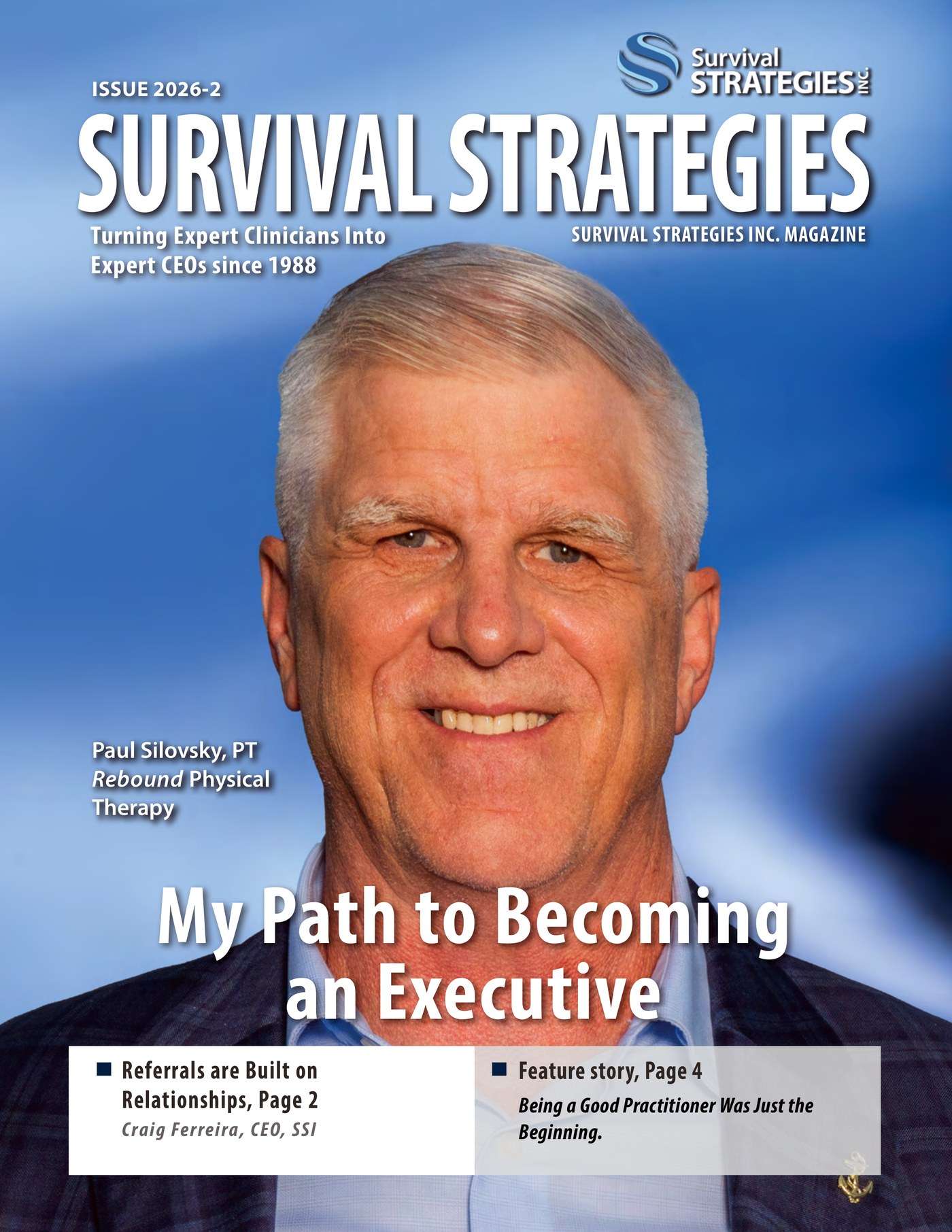
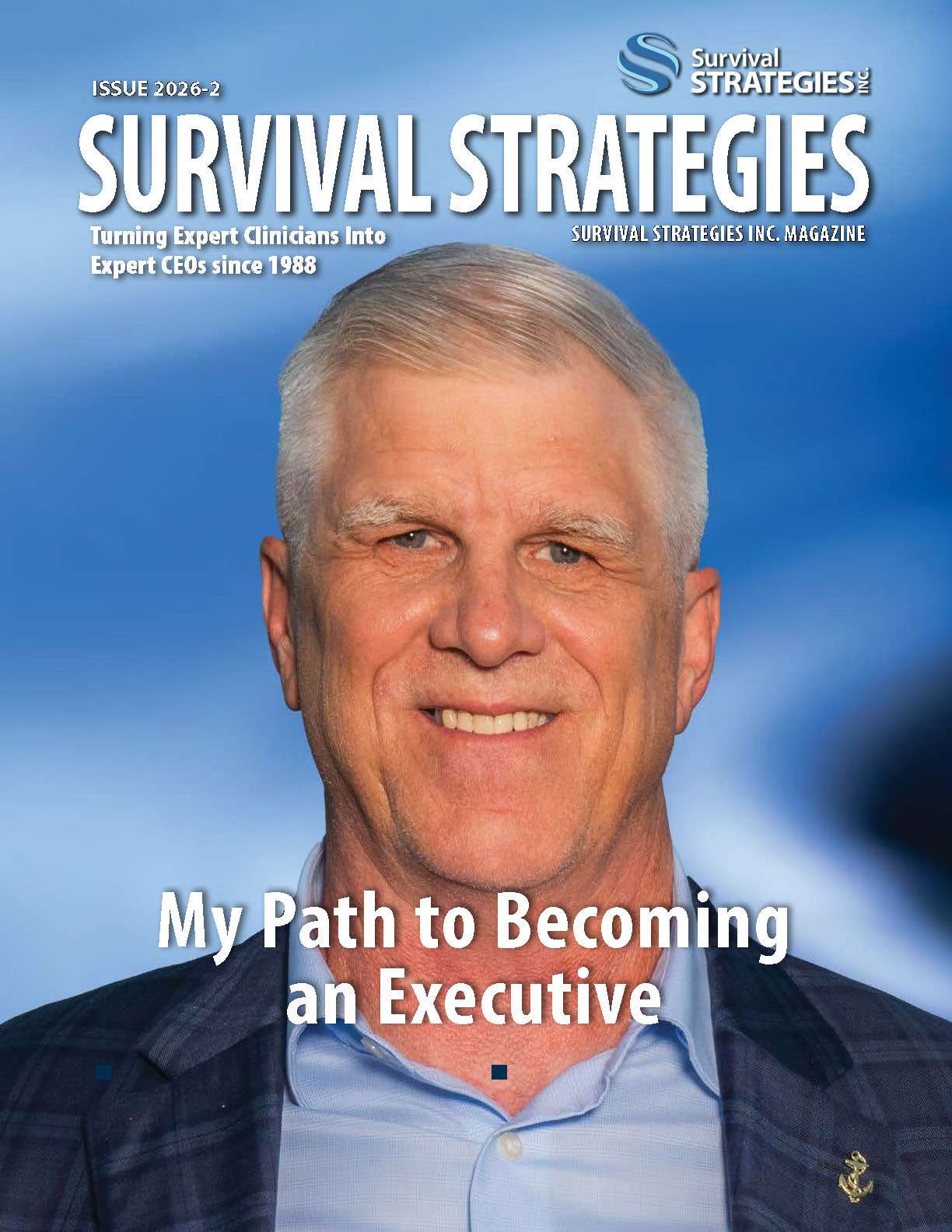
My Path to Becoming an Executive
With Paul Silovsky, PT
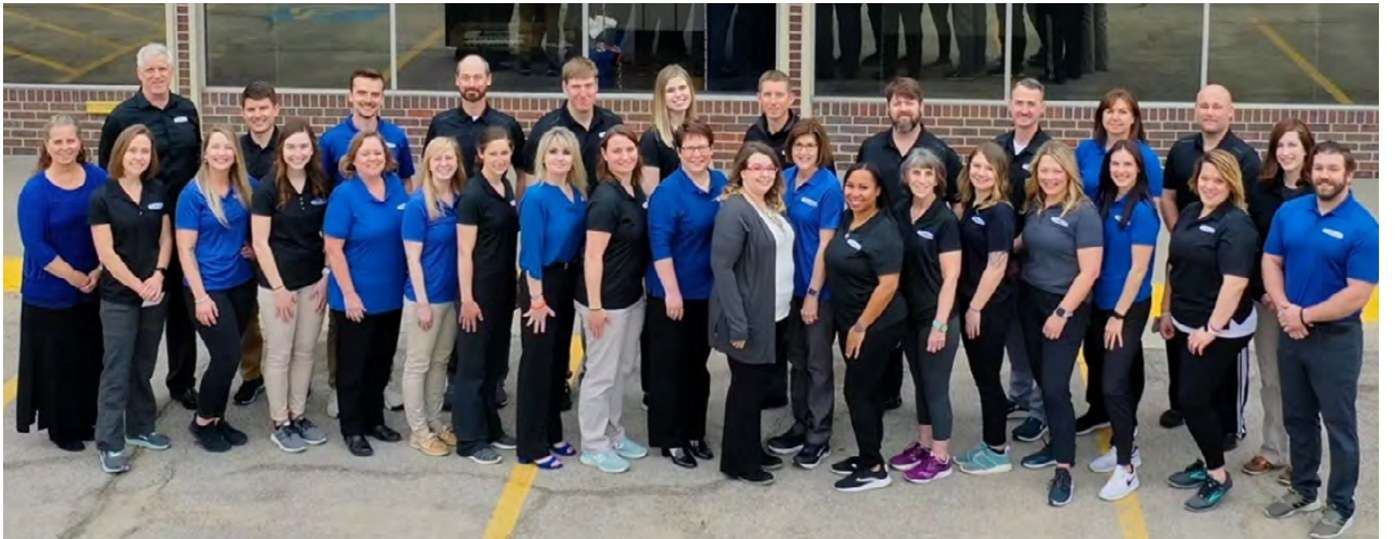
Owner and Executive Director of Rebound Physical Therapy

Paul Silovsky, PT, is the founder and executive director of Rebound Physical Therapy of Topeka, Kansas, an independent practice he established in 1994 and has since built into one of the region’s leading rehabilitation and sports-performance centers.
A former Washburn University football player whose own knee reconstruction sparked a passion for physical therapy, Silovsky earned his degree from the University of Kansas Medical Center. Over the past three decades, he has expanded Rebound to multiple facilities serving a diverse patient base—from young athletes to seniors pursuing mobility and wellness.
Beyond his clinical work, Silovsky has served on the Kansas Physical Therapy Association’s Board of Directors and Legislative Committee, championing fair healthcare policy and professional advocacy statewide.
SSI: Paul, can you take us through the evolution of Rebound Physical Therapy, from startup to success?
Paul: I’ll start from the beginning. My wife, Roxanne, and I started the practice together as a mom-and-pop shop with two PTs including myself. I envisioned a bigger office with four or five therapists practicing.
But we were hugely dependent upon one major referral source, one orthopedic surgeon, for the majority of our business. Losing him would have been devastating: we had no other system to replace the new patient volume.
That worried us.
Fortunately, early on, I found Survival Strategies at a practice convention, and they did an analysis of my business.
The analysis was spot-on: before anything else, I would have to diversify my referral base. Hard work was never the problem; I wasn’t afraid to go out and hustle. But the Consistent Referrals Program provided the needed public relations training and the system to build a steadily expanding referral base that has carried us to three clinics with well over 1,000 visits per week.
SSI: What was your next milestone?
Paul: Becoming an effective executive was the hard one. I had to admit that it took three people to replace everything that I did before I could actually become the executive director or CEO of the company.
But it exponentially grew when I was able to get all three people in place.
Being an executive used to be my nemesis. Now it’s all I do.
SSI: What are the threats to efficiency and profitability?
Paul: One threat to efficiency is staff who haven’t been fully established as team members you can count on. Another would be staff who can’t learn because they think they know it all already. New hires can cause friction that way, so flexibility and willingness to learn are qualities of a good hire.
“Being an executive used to be my nemesis. Now it’s all I do.”
More importantly, are there policies, systems, programs in place that will get people to just continually do things the way you want them done, and then are they measurable? Is there something that you can look at weekly that says, “Hey, we did a good job. We completed 15 highly satisfied patients whose lives and functions have been improved through our services this week”?
If you can establish people, get them to do what you would and measure the results, you’ll be profitable. That’s an executive. That’s where SSI has helped me the most, because it’s where I was weakest.
PT school doesn’t go deep on business or executive roles. Don’t get so comfortable in the therapist role that you can’t quickly shift to your executive hat and give it all your attention.
Does the organization look like you? Does it reflect your leadership style? Do your employees do the things that you would do? And do they get the outcomes that you would get? You need to put together a whole organization that can do that.
We want to find responsible, effective people and get them acquainted with our policies and procedures as rapidly as possible. We need to make sure our staff know what is expected of them, train them in how to achieve those results, and do it consistently.
Establishing staff and having training systems is hugely important. Survival Strategies is great at personnel management from the standpoint of predicting human behavior. You’re going to learn how to predict how staff members and patients will respond to your methods, to your ways. That gives you control.
Your implementation consultant will train and apprentice key staff, not just the owner. You never want to be the only one who knows what’s going on in your practice. You’re going to be trained up front, and your consultant will guide you and your team through the whole implementation process.
One of the keys to any Survival Strategies program is the consultant’s weekly meeting with you and your team to make sure you know what you’re doing. You’ll review the statistics together and make adjustments accordingly. 100% return on your investment is their unwavering goal.
(Continued below)
Manage by
Opinion
Guesswork
Statistics

What is the Objective Management Suite?
It is a collection of three software programs specifically designed for monitoring and optimizing your business.
These programs give you an objective window on the inner workings of your production machine, without the guesswork.
With the help of OMS, you and your consultant can zero in on areas of lost income or poor utilization, and give your staff a firm grasp on their progress toward targets and goals.
To bring your business into laser focus with OMS
The Path to Becoming an Executive
SSI: How have you been able to avoid burnout over the years?
Paul: I’ve avoided burnout by never being the only one who knows what’s going on. By getting my managers involved in the long-term planning as well as the day-to-day decisions. I resist the temptation to take over any task I could delegate.
SSI: Any parting words of advice?
Paul: Yes—make your team responsible. Involve your leaders in your SSI programs, from the “book work” to the mentoring and apprenticeship steps. And reward accomplishment!
That’s been my path to success.
What Is “Lost Profit”?
Joshua Fair, Senior Consultant
To win in today’s competitive market, private practices need to close the loop on “lost profit.” Potential revenue—also called “lost income”—comes from correct allocation of money to those things which keep operations smooth or fuel growth, rather than to non-essentials or inefficiencies.
Our free Lost Profit Analysis will give you “eyes on” to your practice’s operations from the viewpoint of which dollars are fueling profitable growth, and which allocations are draining profits.
Drawing from proven Hubbard management principles, your SSI consultant will reveal just how much profit is slipping away weekly. You will pinpoint where you are losing potential profit and get a clear roadmap of how to stop the bleed.
Get practical tools for today’s survival and tomorrow’s expansion. Claim your free Lost Profit Analysis today and turn “lost” into surplus.
Measurable results in the first month!
Boost Revenue the Proven Way, FAST!
The Consistent Referrals Program

Strong referral relationships increase new patient volume quickly. The Consistent Referrals Program installs a system for building and maintaining long-term referral relationships that keep new patients coming in steadily without a dedicated sales staff.
You’ll Get:
- A proprietary “Consistent Referrals” system that shows you how to comfortably cultivate lasting referral relationships;
- Four days of one-on-one skills training on building relationships with physicians and other referral sources;
- Up to eight months of weekly implementation calls with your consultant;
- A system to keep referral sources active over time;
- 100% return on investment.
The program is considered complete when the owner can reliably generate and maintain referral relationships and has recouped their investment through increased referrals.
For more information, visit us at https://survivalstrategies.com/programs, or ask your consultant for details.
Case Study
Case Study: Christina Panetta, Panetta Physical Therapy, Long Island, New York
Challenges: At first, Christina was operating out of a health club with just a few staff. After ten years in operation, the practice was only up to 150 visits per week. They relied on one doctor for 70% of their referrals and four other sources for the rest.
Working their way through the Consistent Referrals Program, focused on developing referral sources, marketing, reimbursements, and financial control, Christina and her team expanded their referral sources from five to 250 per year, with 800 visits per week at three Long Island, NY locations.
Successes
“In the first six months, my referrals increased 27%. Our patient load has increased 50%.”
M.R., PT
“Out of confusion and desperation, we decided to do the Survival Strategies program to increase referrals. Now we are reaping the dividends! We have gone from 300 patient visits per week to 450!”
M.J.S., PT/CHT, Davenport, IA
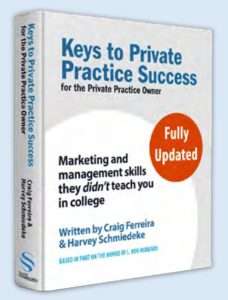
Coming Soon
Your superior clinical training and experience is hard-won. You need the strategies and tools to apply it. In the fully updated book, Keys to Private Practice Success, you will learn what they didn’t teach you in school:
- How to stand out from the competition.
- How to hire, motivate and retain the best staff.
- How to do financial planning for better profits.
- How to get the upper hand on insurance reimbursements.
- How to control the quantity and quality of patient referrals.
Contact us to preorder your copy.